Cleaning The Tiles In the Bathroom Until They Shine

Cleaning the tiles until they shine can make the whole bathroom look cleaner, brighter and more beautiful. Here are some practical tips to help you make your bathroom tiles clean and shiny.
Before deep cleaning the flooring, choose cleaners compatible with your tiles to avoid damaging them. Most cleaners are suitable for ceramic tiles, but you may want to test the cleaner on a small surface of tiles to be sure because even household products can damage them – vinegar, for example, can contaminate marble.
How to clean joints
The best way to clean the tiles properly is always to deal with the joints first. Dirt attracts mould faster, creating a black web of mould that makes the bathroom look dirty, no matter how shiny your tiles are.
- Apply special detergent to the joints, keeping it 5 cm from the wall or floor. Let it work for 10 minutes or as recommended on the label.
- Or use a home made cleaning solution. Just mix vinegar and baking soda using a toothbrush to scrub. If mould remains, repeat the process, leaving the mixture overnight.
- Wipe the cleaner with a sponge.
How to clean the tiles: wash the tiles. Washing tiles is less time-consuming than cleaning joints.
- The best way to clean the tiles is to start heating the bathroom. Run a shower at a high temperature until steam fills the bathroom. Condensation will loosen any dirt and make it easier to clean the tiles.
- Spray with your chosen bathroom cleaner and let it dissolve the dirt for a minute.
- Wipe the cleaner with a sponge or damp paper towel and polish the joints with a dry microfibre cloth until shiny.
How to make the bathroom glow with cleanliness?
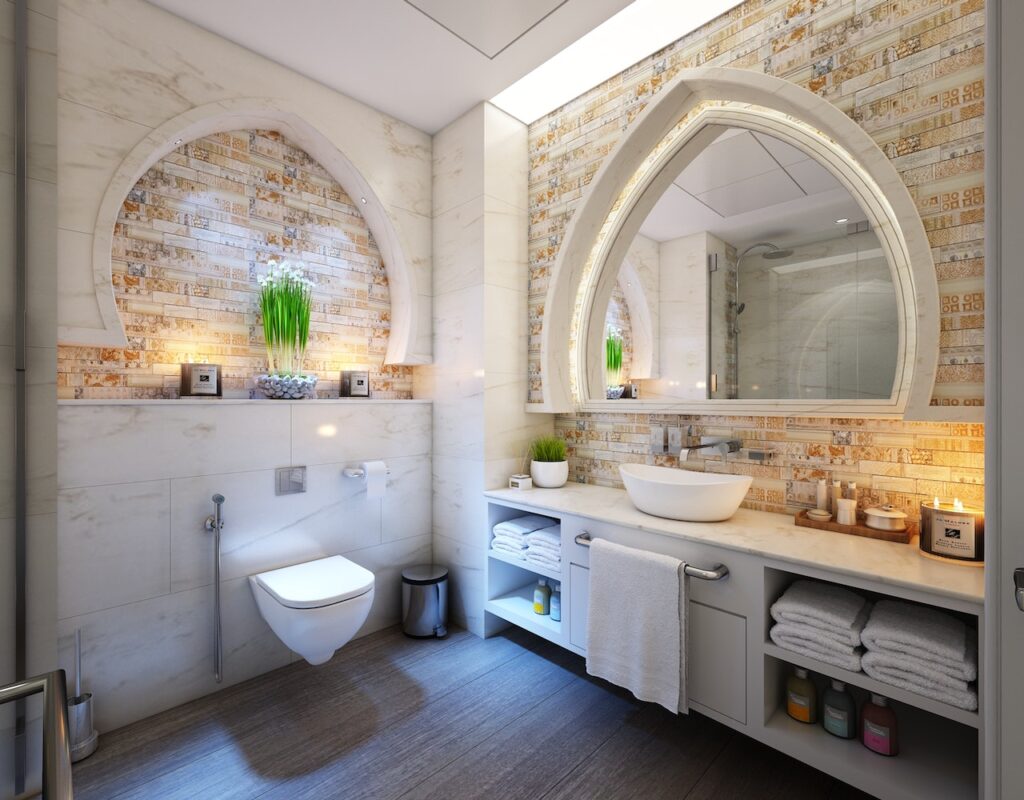
Whether glossy or matte, faience tiles cover a layer of final heat-treated glaze, which is resistant to moisture (and in the bathroom, it is not insignificant) and protects the tile from dirt. But even such a strong coating needs daily cleaning. Daily care makes it possible to use less aggressive chemicals for bathroom cleaning, negatively affecting human health.
You can easily remove contamination, scale, water droplets on the tiles, traces of soap foam and shampoo with a soft sponge soaked in a bit of dishwashing detergent or ordinary soap solution. It is unnecessary to use aggressive detergents containing abrasive particles every time; it is advisable to use them as infrequently as possible. The abrasive particles scratch the hard surface (no matter how hard it is still possible to scratch) on the tiles, and your bathroom can get a not-so-shiny look. A simple soap solution is often enough to restore the bathroom’s former beauty. After wet cleaning, wiping the bathroom tiles with an absorbent cloth is essential to remove all drops of water and detergent residues that leave marks on the tiles after drying – especially on glossy surfaces.
In some cases, it is good to use flavoured disinfectants, which, in addition to destroying harmful microflora in the bathroom, leave behind a pleasant aroma.
Basic cleaning of the tiles in the bathroom
Even with the most regular and thorough daily cleaning, there comes a time when the bathroom tiles need a more thorough cleaning. Before choosing an aggressive detergent, it is desirable to thoroughly inspect the bathroom and pay attention to the condition of the joints. Select even more aggressive detergent, especially for them, as often the joints are the most polluted part of the tiles, whether it is a kitchen, bathroom, floor or wall. These detergents are usually different from those intended for the rest of the bathroom. It is advisable to determine what will clean with it before buying a detergent so that it does not turn out that the chosen detergent does not give the desired effect. When selecting a detergent, it is essential to pay attention to the surface for which it is. Otherwise, the surface may be permanently damaged and need to replace.
It would help if you took particular care with acid-based detergents, which people often use to clean porcelain sinks and toilet bowls. We advise you to use preparations based on flavouring and disinfecting additives to remove organic contaminants.
On the other hand, if it is necessary to remove traces of rust or scale, it is better to use weakly acid-based preparations that do not damage the glossy layer on the tile surface. The main recommendation when choosing a detergent for cleaning in the bathroom is to read the instructions on the detergent carefully and describe in detail: the method of application, possible reactions and effects on surfaces. Similar products from different brands often have a similar composition. And absolutely all describe safety precautions.
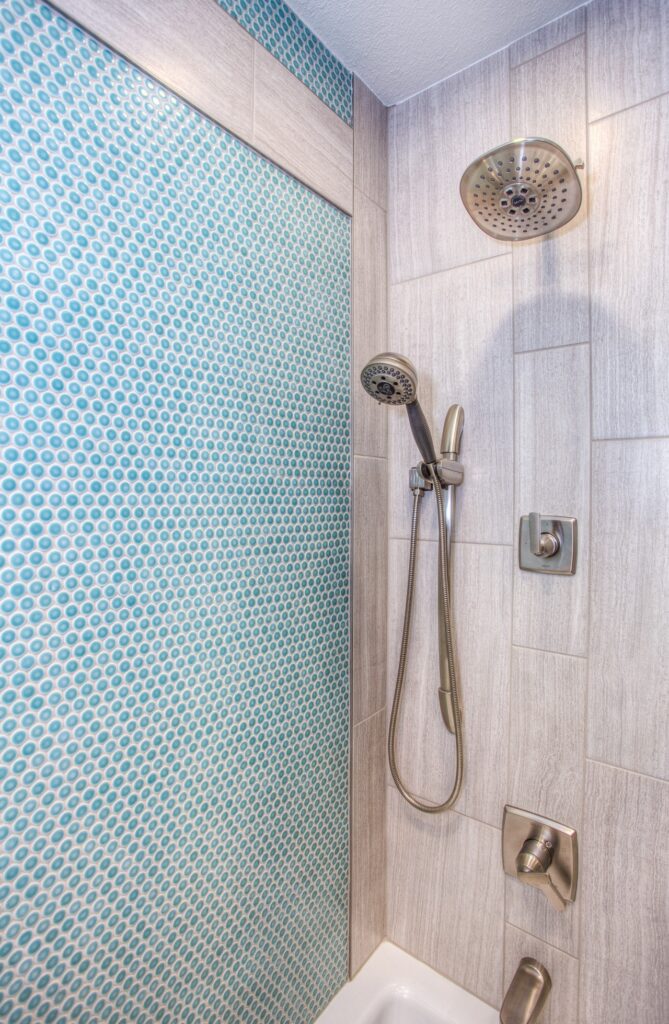
If you do not want to take advantage of factory household chemicals, are allergic to some of the ingredients, or just if you care about what you throw away in your environment, the alternative is to clean the bathroom with handy tools in the kitchen. The result will be the same. Here are some tips:
- Vinegar: with its help, you can remove scale from the surfaces in the whole bathroom in a few minutes, wherever they are. Just spray the vinegar solution on the covers with a spray gun, wait a few minutes, rinse and wipe with a dry absorbent cloth.
- Citric acid: if you clean the tiles in the bathroom with a solution of citric acid, you will get a perfect result with an antibacterial effect, odourless and high environmental safety.
- Chlorinated lime: used as a water solution with a low concentration. Removes most of the organic contaminants and has excellent disinfectant and bleaching properties. You can buy a ready-made solution, which we know as Bleach. The disadvantage is that it has a sharp and pungent odour, so use it carefully. Before using coloured tiles, making a preliminary test in an invisible place is desirable.
- Baking soda: used as a slurry. Apply with a damp swab without much pressure. Successfully deals with old pollution. Its disadvantage is that it has a high content of abrasive particles and can damage the glossy coating.
- Ammonia alcohol (ammonia): a weak solution of ammonia cleaning the tiles in the bathroom and the joints. However, when choosing this tile agent, you should remember that the high concentration of the solution is dangerous and has a sharp and pungent odour.
- You can use a melamine sponge and a toothbrush for the joints as cleaning aids for the bathroom. If you want to clean the bathroom without any detergents, use a steam cleaner. Sometimes this is the only possible option – in homes where children live, pets or people with severe lung disease.
You should always choose between two different detergents when using chemical cleaners in the bathroom. Failure to observe this measure may result in uncontrolled chemical reactions accompanied by the release of free chlorine, ammonia or other toxic and irritating gases.